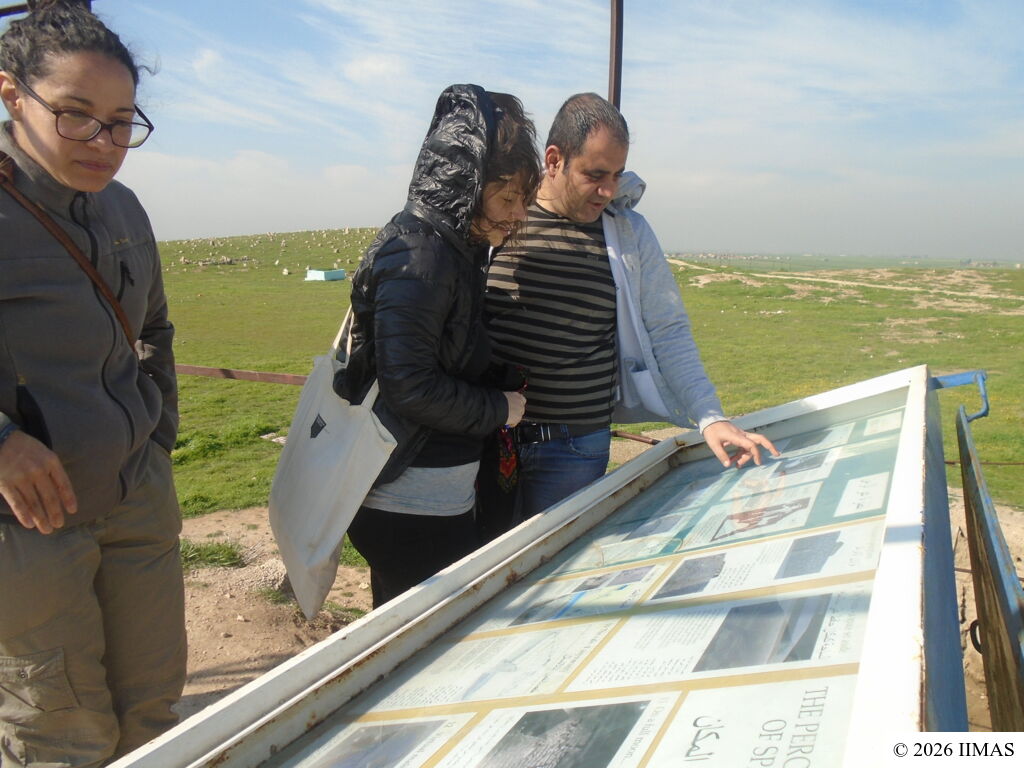
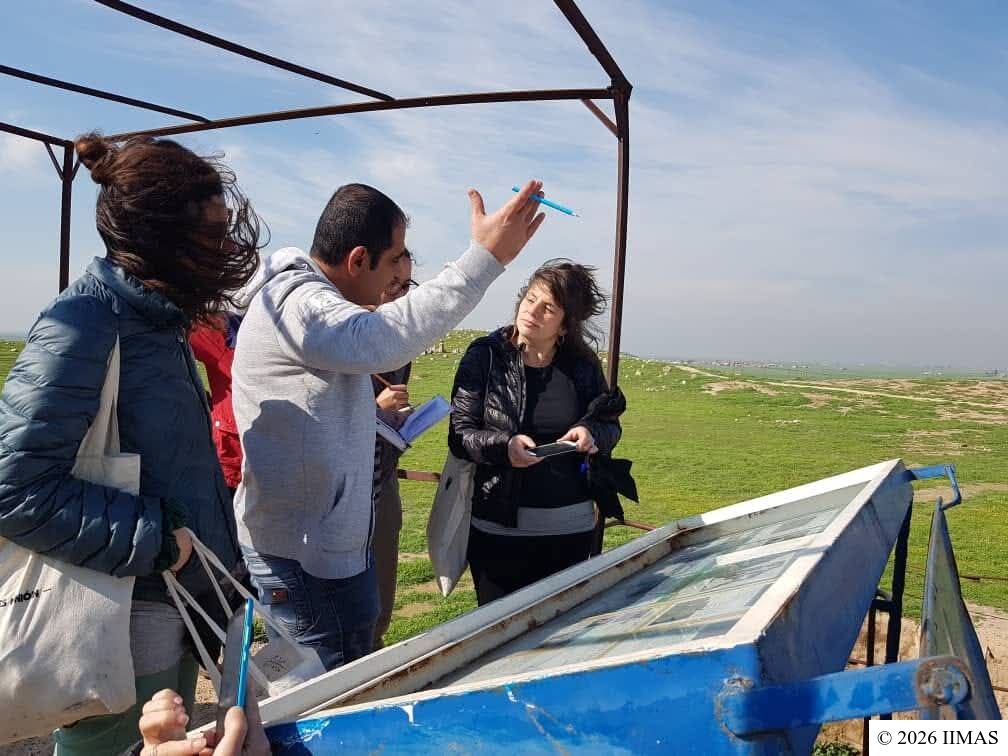
Urkesh welcomed foreign visitors, where a group of six girls from Spain came to Tell Mozan. As I usually do, I began by introducing the site from a historical perspective. Throughout my explanation, I noticed their great interest in every detail I shared. They carefully recorded the historical information and expressed curiosity about the administrative affairs of the ancient city of Urkesh. They wondered how the archaeological mission had learned about these administrative practices and where the cuneiform tablets and seals referring to them had been found.
They were also fascinated by the photographs of the bronze lions displayed on the information panels. They wondered why the people of Urkesh had shown such a great interest in lions, asking, “are they refer to existence of many lions in the city”? Of course, I explained that the lions symbolized the strength of a kingdom that had never been conquered by foreign powers.
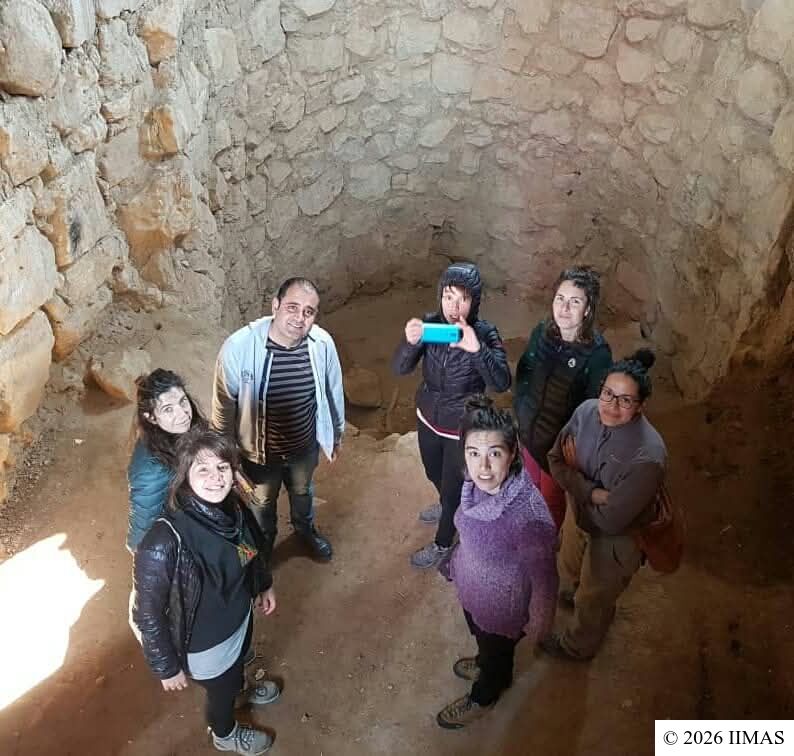
The massive mud-brick walls also greatly impressed them. They even asked whether the walls were ancient or had been restored in modern times. They were delighted to see walls that had survived from the same period as the construction of the royal palace.
I would like to share with you the following words, written by the visitors themselves:
“It is important to know roots of the history and to preserve this treasure . the knowledge of the history will give us tools better understand the present and to build the future.
Congratulations…
Thank you all”
|
|
|
Back to top: Spanish tourists at Urkesh